I have a confession to make. For years I was the person who rolled up a sweatshirt and wedged it between my neck and the airplane window, then spent the next three days working a knot out of my shoulder. So when I finally bought the napfun memory foam neck pillow after one stiff-necked flight to Phoenix, in time for our next one, I did not expect much. I expected a lumpy tube that would slide around and end up in my lap by the time we reached cruising altitude. What I got was a pillow that actually stayed put, held my head up, and got me through a four-hour flight without the usual stiff neck. That surprised me enough that I wanted to write down the honest version of what it is like to live with this thing, not just the five-star version.
The Quick Verdict
The napfun neck pillow is the rare travel pillow that does what it promises: it keeps your head from flopping forward on a long flight. It is firm, it fits snugly, and it packs down smaller than I expected. It is not perfect, and I will tell you exactly where it falls short.
Amazon Check Today's Price →Tired of landing with a stiff neck?
The napfun memory foam neck pillow is the one I now pack for every flight over two hours. It holds your head up so you can actually rest, and it squashes into its own bag for the carry-on.
Amazon Check Today's Price on Amazon →How I've Used It
I am Bev, and I write about travel from the perspective of someone who has made every packing mistake you can make. I am 63, I live in Knoxville, and my husband Dale and I take a few trips a year. Most of them start with a long drive to see our daughter's family in North Carolina, but our next flight to Phoenix to visit Dale's brother was the first real test for the napfun pillow. I wore it on the outbound flight and the return flight, including a connection and a ninety-minute wait at the gate, and I have since used it in the passenger seat on the drive to North Carolina, which is not something I ever did with a travel pillow before.
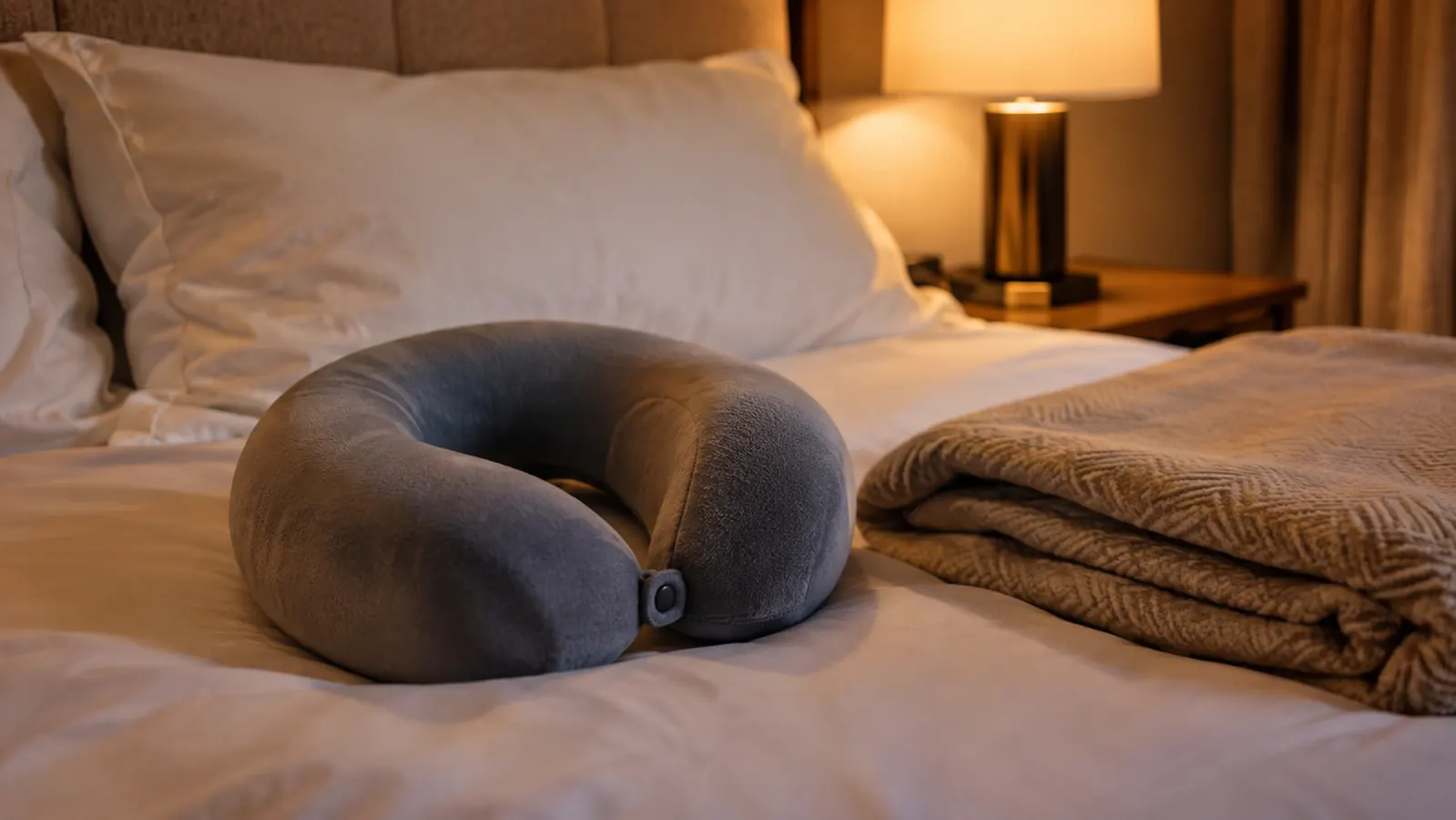
The pillow is memory foam all the way through, and you can feel the difference the moment you squeeze it. It is not the inflatable kind that goes soft after an hour, and it is not the bead-filled kind that shifts every time you turn your head. It is dense and slow to spring back, which means it actually holds up the weight of your head instead of just decorating your neck. The cover unzips and comes off for washing, which matters more than you might think after a few flights next to strangers.
The shape is the part I was most skeptical about. It is a contoured U, thicker in some places than others, and it took me a minute of turning it around in my hands to figure out which way was front. The first time I put it on, I thought it felt too firm. By the second flight, I understood why it is firm. A soft pillow lets your head flop. This one holds it in place, and that is the whole point.
What Nobody Tells You About the Firmness
Here is the honest part. The napfun pillow is firm, and firm is not for everyone. Dale tried it on the way to Phoenix and handed it back after twenty minutes. He likes a soft pillow at home, and this one felt like a block of foam to him. He spent the rest of the flight leaning his head against the window on a folded airline blanket, and he was perfectly happy, which tells you something about how different two necks can be. I liked it because my neck needs the support, but if you are someone who sleeps on a flat, soft pillow, this will take some getting used to, and it may never feel right.
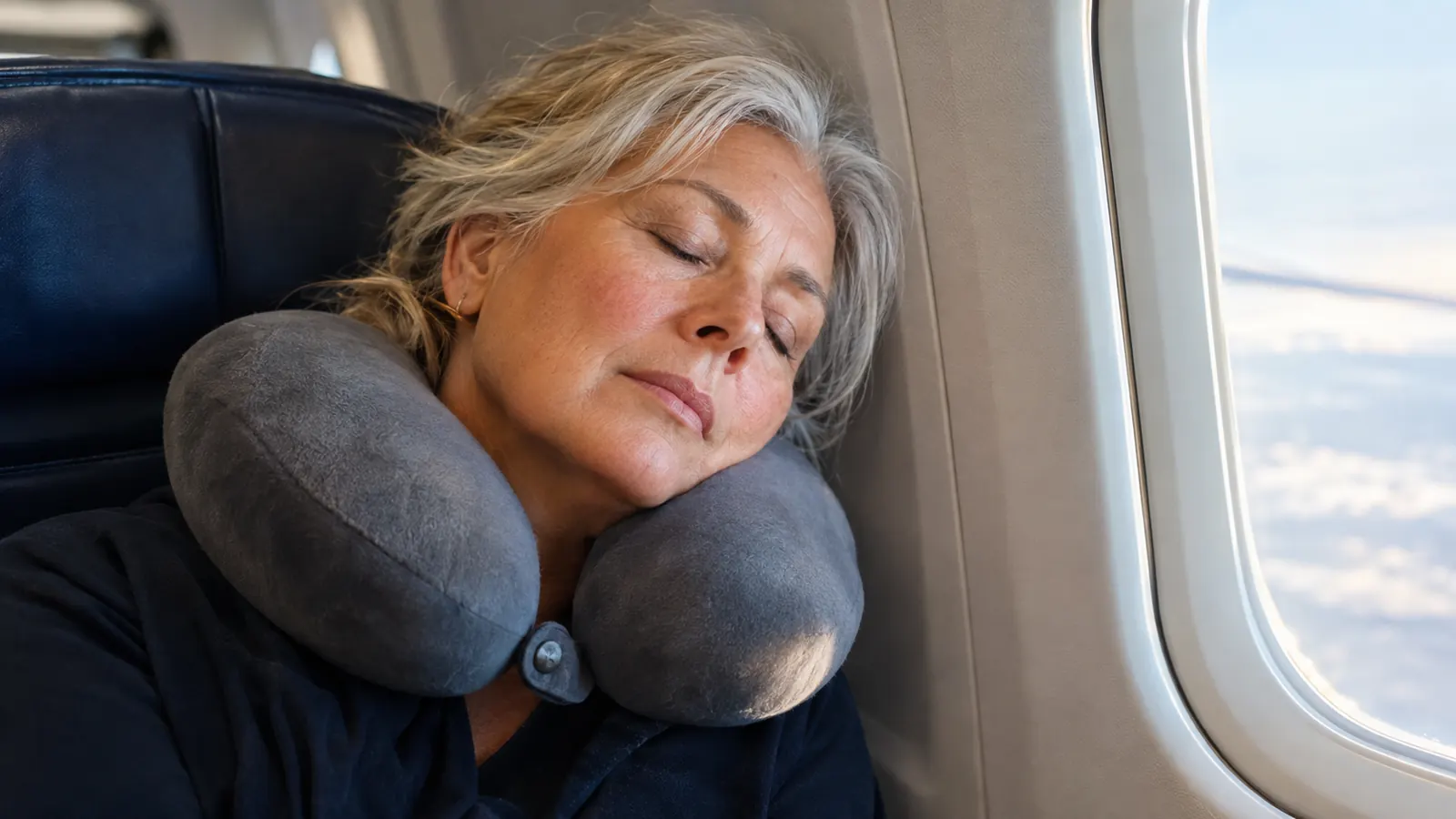
The firmness is also why the pillow works on a plane. When you doze off in an economy seat, your head wants to roll forward or sideways. The napfun pillow catches it before it drops, so I woke up with my head in roughly the same position it was in when I fell asleep. On the old rolled-sweatshirt method, I used to jerk awake every time my chin hit my chest, which is about the least restful way there is to spend a flight.
I want to be specific about what firm means here, because the word gets thrown around a lot. This is not the soft, plush memory foam you find in a cheap bed topper. When I pressed my thumb into the side of the napfun pillow, it took a good five or six seconds to spring back. The first night I tried it at home, sitting up in bed to watch television, I took it off after ten minutes because it felt like I was wearing a piece of furniture. The next morning I put it on again while I drank my coffee, just to see if I could get used to it, and by the third day I stopped noticing the firmness entirely. What I did notice was that my neck did not ache the way it usually did after a long day of sitting.
There is a breaking-in period, and nobody tells you that. The foam does not soften the way a down pillow softens, but it seems to settle to the shape of your neck over a few uses, so the first time you wear it will feel the firmest. I would suggest wearing it at home for a few evenings before the trip, sitting up on the couch with the television on. It feels silly, and Dale had opinions, but it meant the pillow was familiar by the time I was in seat 23A and not something I was fighting with.
I woke up somewhere over Texas with my head still upright. That has never happened to me on a plane before.
The Clasp, the Cover, and the Little Details
The napfun pillow closes with a clasp at the front, and this is where I have to be honest about a small annoyance. The clasp sits right under your chin, where you cannot see it, so the first few times I put the pillow on, I fumbled with it, especially sitting in a cramped seat with my elbows pinned by the armrests. Once I learned the feel of it, I could fasten it in a couple of seconds without looking. But on day one, expect to fiddle. I would practice at home a few times rather than learn it with the person in the aisle seat watching.
The cover is another detail that surprised me. It is soft, it unzips completely, and it came through the washing machine on a gentle cycle without shrinking or pilling. That is more than I can say for some of the travel pillows I have owned. I air-dry it over the back of a kitchen chair rather than trusting the dryer, and it is ready by the next morning. The zipper sits where it does not rub against your neck, which is a small thing that makes a big difference four hours into a flight.
It arrives compressed in a small storage bag, and the bag turned out to be more useful than I expected. You squash the pillow down, stuff it in, and it stays clean in your carry-on and has a place to live between trips. One tip: when you take it out, give it some time to expand. The first time, I pulled it out of the bag at the gate and it was still a little flat on one side when we boarded. Now I take it out the night before and let it sit on the bed.
One more detail I had to learn: how you wear it matters. On the first flight, I wore it pulled up high and snug, and my jaw felt a little crowded, like I was wearing a turtleneck two sizes too small. On the flight home, I let it sit lower on my shoulders and turned it slightly so the thicker side was toward the window, the direction my head always tips. That small change made it far more comfortable. If you buy this pillow, try a few positions on the couch before you get on the plane, not after.
How It Packs and Carries
This was a real surprise for me. I expected a memory foam pillow to take up half my carry-on. Squashed into its bag, the napfun pillow is about four inches thick, and it slides into the outer pocket of my roller bag without making me give up anything else. It is not as small as a deflated inflatable, and I will not pretend it is, but for something that actually works, the footprint is fair. For someone who has spent years overpacking, keeping it to one pocket matters.
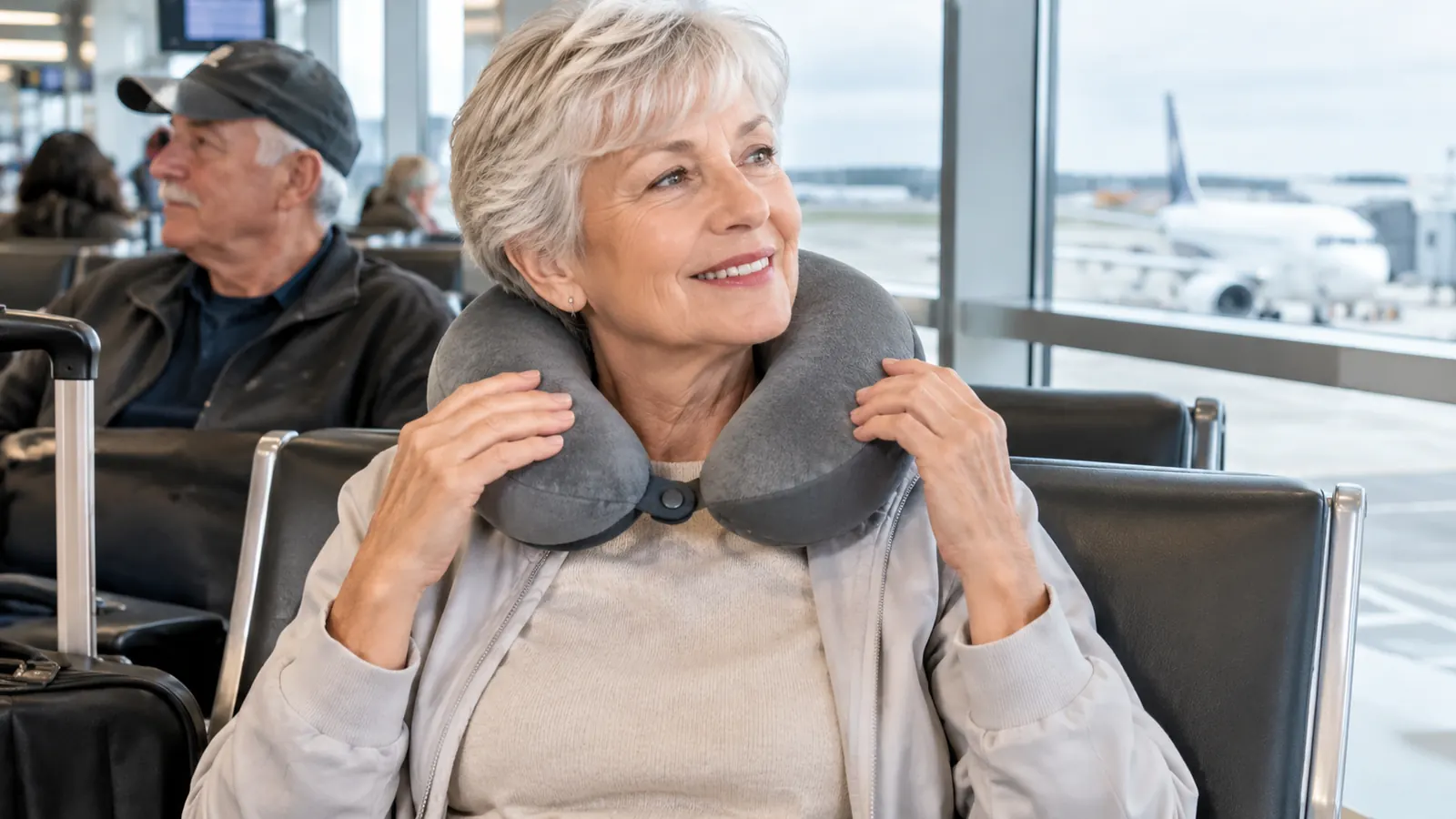
Most of the time I do not pack it at all on travel days. I wear it around my neck through security, take it off for the bin, and put it back on at the gate. On the Phoenix trip, the TSA officer did not give it a second look. On the plane, I set it on top of my roller bag in the overhead bin when I am not wearing it, so it does not get crushed under someone's duffel. It is not the most elegant look, walking through the terminal with a pillow on my shoulders like a horse collar, but it is practical, and practical is what I care about.
Let me give you the exact packing math, because this is the part I would have wanted to know before I bought it. My carry-on is a standard 22 by 14 by 9 inch roller bag, and the napfun pillow in its bag takes up roughly the same space as a rolled-up pair of jeans. It fits standing up in the front pocket next to my toiletry bag, and I can still close the zipper without forcing it. On the way home from Phoenix I also stuffed a denim jacket into that same pocket, and the pillow still fit. The inflatable I used to carry was smaller on paper, but I always packed it half inflated because I could never get all the air out, so the real difference was less than you would think.
How It Compares to What I Used Before
Before the napfun pillow, I used an inflatable one that I bought at an airport gift shop. It was cheap, it packed down to nothing, and it was useless. By the time we landed, it had leaked enough that my head was resting on a half-empty balloon. The napfun pillow does not leak, it does not need to be blown up, and it does not deflate halfway through a flight. That alone is worth the extra space it takes up.
I also tried a friend's U-shaped pillow filled with little foam beads, on a car trip where she had brought two. It was softer than the napfun and nicer to squeeze, but it slid around on my neck, and every time I turned my head the beads shifted away from where I needed them. Within an hour it had worked its way around so the thick part was behind my head and the front was doing nothing. The napfun's solid foam is the difference. It holds its shape and stays where you put it, instead of rearranging itself every time you move.
I kept the inflatable pillow in my carry-on for the first leg of the Phoenix trip, just in case I hated the napfun. Somewhere over Arkansas I realized I had not touched it once. On the way home I left it in the hotel room. That was not a decision I made on purpose. I just looked at it on the hotel dresser and thought, I am never going to use this again, and I did not.
The Honest Pros and Cons
What I Liked
- Held my head up on a long flight, so I landed without the usual knot in my neck
- Dense memory foam that does not go flat or leak like an inflatable pillow
- Squashes into its own bag and fits a carry-on outer pocket
- Removable, washable cover that came through the washer looking new
- Comfortable in the passenger seat of a car, not just on a plane
Where It Falls Short
- Firm foam takes a few uses to feel familiar, and it never gets truly soft
- Front clasp sits under your chin and is fiddly until you learn the feel
- Can push the chin up on a short neck
- Bulkier than a deflated inflatable, so it needs a pocket or a spot on top of your bag
- Needs time to expand after coming out of its bag
Who This Is For
The napfun neck pillow is for anyone who lands from a flight with a stiff neck and a headache. It is for people who fall asleep on planes and wake up with their head in their lap. It is for side sleepers, back sleepers, and anyone who has ever used a rolled-up sweatshirt as a pillow and wondered why it did not work. If you fly a few times a year and you want to land feeling like a person, this pillow is worth trying.
I would also say it is for people who sit upright for long stretches in general, not just on planes. I used mine in the passenger seat on the drive to North Carolina, and it kept my head from sagging against the window the way it always does somewhere past Asheville. Dale still will not touch it, but he also sleeps on a pillow that is practically flat at home, so I take his opinion on this one with a grain of salt.
Who Should Skip It
If you hate firm pillows, skip this one. If you have a short neck, the pillow might push your chin up more than you like, and a flatter pillow could suit you better. And if fiddly clasps make you crazy, know that the first few fastenings take patience. None of those are reasons the pillow is bad. They are reasons it is not for everyone, and I would rather tell you that now than have you find out at 30,000 feet. One more thing: a travel pillow is a comfort item, not a treatment. If you have real neck pain, a past injury or numbness, talk to your doctor about what kind of support is right for you before you buy any of them.
I will also say this: if you only fly once a year, you have to decide whether the breaking-in period is worth it to you. The napfun pillow is at its best on the third or fourth trip, not the first. If you want something that works perfectly the very first time you use it, an inflatable pillow is easier, even if it is worse. That is the honest tradeoff, and I think it is a fair one to know about.
The pillow I now pack for every flight
The napfun memory foam neck pillow is firm, supportive, and packs down small enough for a carry-on. If you are tired of landing with a stiff neck, this is the one to try.
Amazon Check Today's Price on Amazon →