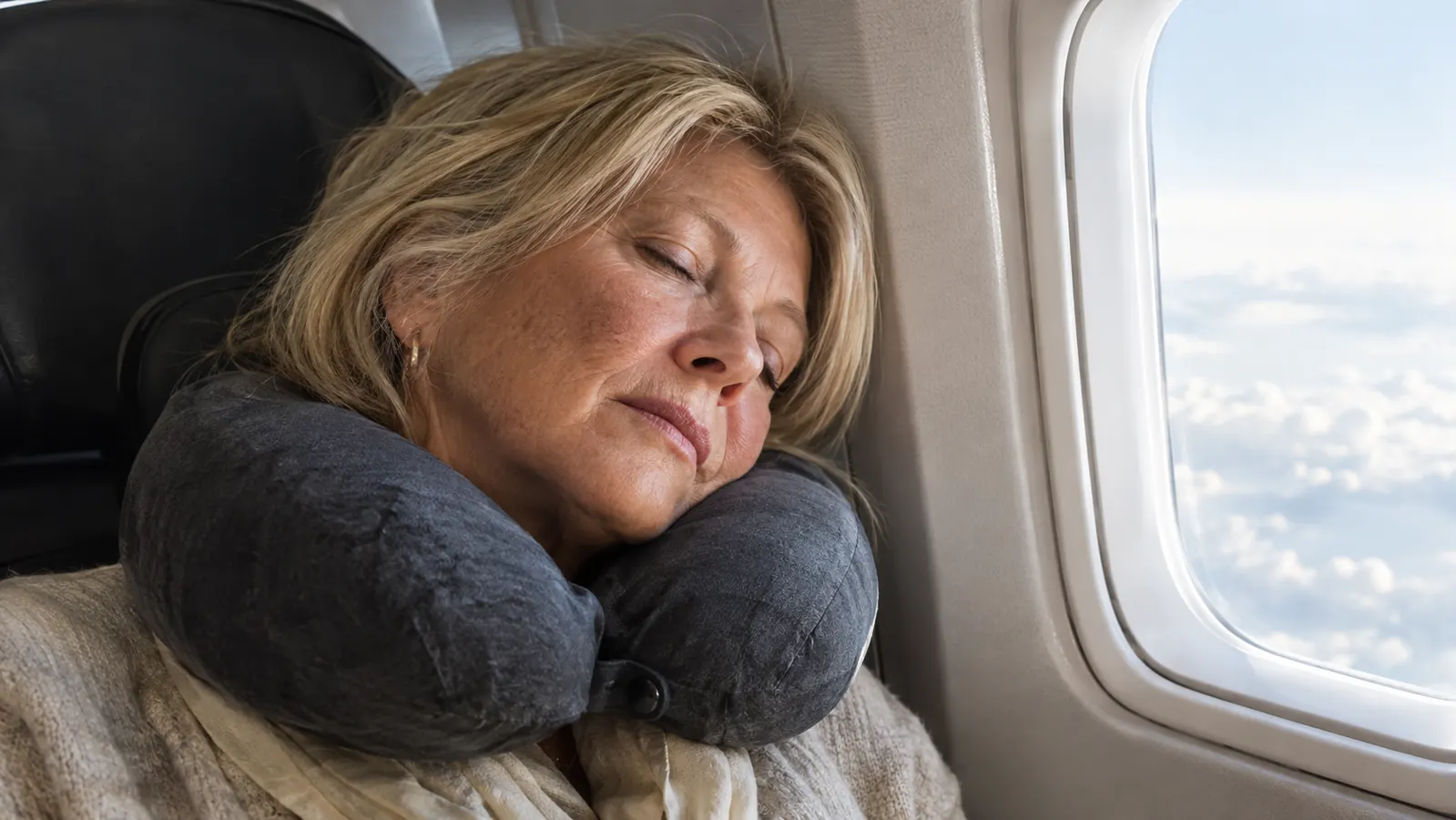
I used to think neck pillows were for people who could fall asleep anywhere. I was not one of them. On a flight to Phoenix to see Dale's brother, I woke up with my head bent at an angle that made me yelp when I turned to look at the snack cart. My neck hurt for three days. That was the trip I finally admitted the problem was not the airplane seat. It was that I had never bothered with a proper neck pillow, and I had no idea how to use one correctly.
The napfun travel neck pillow is the one I have used on every flight since. But here is what nobody tells you: the pillow only works if you set it up right, pick the right seat, and position your body before you close your eyes. This guide walks through the whole setup, step by step, so you can actually sleep on a plane instead of just carrying a pillow that takes up space in your bag.
The napfun neck pillow is the one I pack for every flight
It is the pillow I reach for when I want to land without a stiff neck. Check today's price on Amazon and see if it fits your travel routine.
Amazon Check Today's Price on Amazon →Step 1: Choose the Right Seat Before You Book
The pillow matters, but the seat matters just as much. I learned this the hard way on a red-eye years ago when I booked a middle seat because it was cheaper. My old inflatable pillow did what it could, but there was nowhere for my head to go. I spent the night leaning forward, and my lower back complained for a week.
If you can, book a window seat. The wall gives your head something to rest against, and the napfun pillow fills the gap between your neck and the window. You can also lean the pillow against the window and tuck your head into it, which is the position that works best for me. Aisle seats are fine if you like getting up, but you lose the wall. Middle seats are the hardest place to sleep on any flight, no matter what pillow you bring.
One more thing: check the seat pitch before you book. Budget airlines pack rows tighter, and a pillow that works great in a roomy seat can feel useless when your knees touch the seat in front of you. I look for at least 30 inches of pitch on flights over three hours. It makes a real difference in how much room you have to shift around. On the Phoenix flight that started all this, I had 28 inches of pitch and my knees were pressed against the seat back the whole way. I remember thinking that even a perfect pillow could not fix that. Now I check the seat map before I pay, and I have moved seats twice at check-in when the row looked too tight.
Step 2: Set Up the Pillow Before You Board
The napfun pillow comes compressed in a bag. If you open it at the gate, it will still be flat when you need it. I take mine out of the bag the night before and let it expand on the hotel bed or on the kitchen counter at home. By morning it is back to its full shape, and it stays that way for the whole trip. The first time I used it, I made the mistake of opening the bag in the terminal. The pillow was still lumpy and half-flat when I boarded, and I spent the first hour of the flight trying to fluff it with one hand while holding my boarding pass in the other. Now it comes out of the bag the night before, every time.
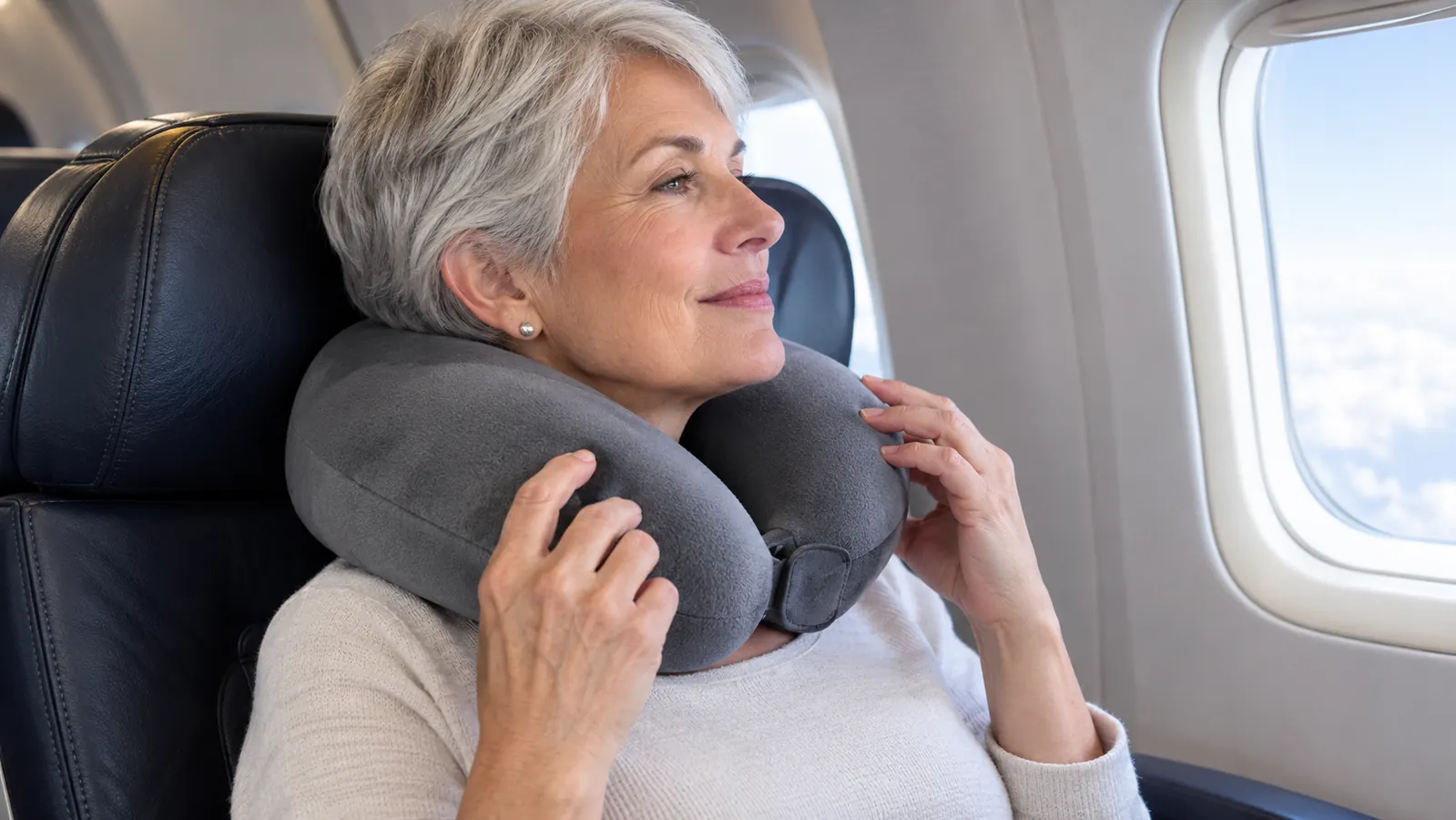
When you get to your seat, do not just drape the pillow around your neck like a scarf. That is the mistake I made for years. The napfun pillow has a thicker section that is meant to sit under your chin, and a clasp at the front. I put the thicker part in front, pull the band snug enough that the pillow stays put, and then adjust it once I am sitting. The pillow should feel like it is holding your head, not like it is just resting on your shoulders.
If the pillow feels too loose, snug it up at the clasp. If it feels like it is pushing your head forward, loosen it. The right fit is the difference between a pillow that helps and a pillow that just adds heat. Take thirty seconds to get it right before the plane starts moving. You will not want to fiddle with it once you are trying to sleep. I also learned to check the fit while I am actually leaning back, not sitting straight up. The pillow sits differently when you recline, and what feels snug at the gate can feel like it is choking you at 30,000 feet.
Step 3: Position Your Body First
Here is the part I wish someone had shown me years ago. The pillow cannot do its job if your body is twisted. I sit all the way back in the seat, with my lower back against the seat back and both feet flat on the floor. Then I lean my head toward the window or toward the seat back, and let the napfun pillow catch the weight of my head.
The key is to keep your spine in a straight line. If you slump forward, the pillow pushes your chin toward your chest and you wake up with a sore neck. If you twist to one side, you put pressure on your shoulder. I sit up straight, let the pillow support the side of my head, and keep my shoulders relaxed. It sounds simple, but it took me a long time to figure out that the pillow works with your posture, not against it. On the flight to Ireland, I finally got this right. I slept for about two hours straight, which had never happened to me on a plane before. I woke up because the drink cart came by, not because my neck hurt.
A small lumbar support helps too. I roll up a sweater or use the napfun pillow's own shape to fill the gap in my lower back. When my lower back is supported, my neck relaxes, and I fall asleep faster. It is a chain reaction: fix the base, and the top follows. I keep a thin fleece in my carry-on just for this. It rolls up smaller than a water bottle and it has saved my back on more flights than I can count.
Step 4: Use the Window and the Tray Table
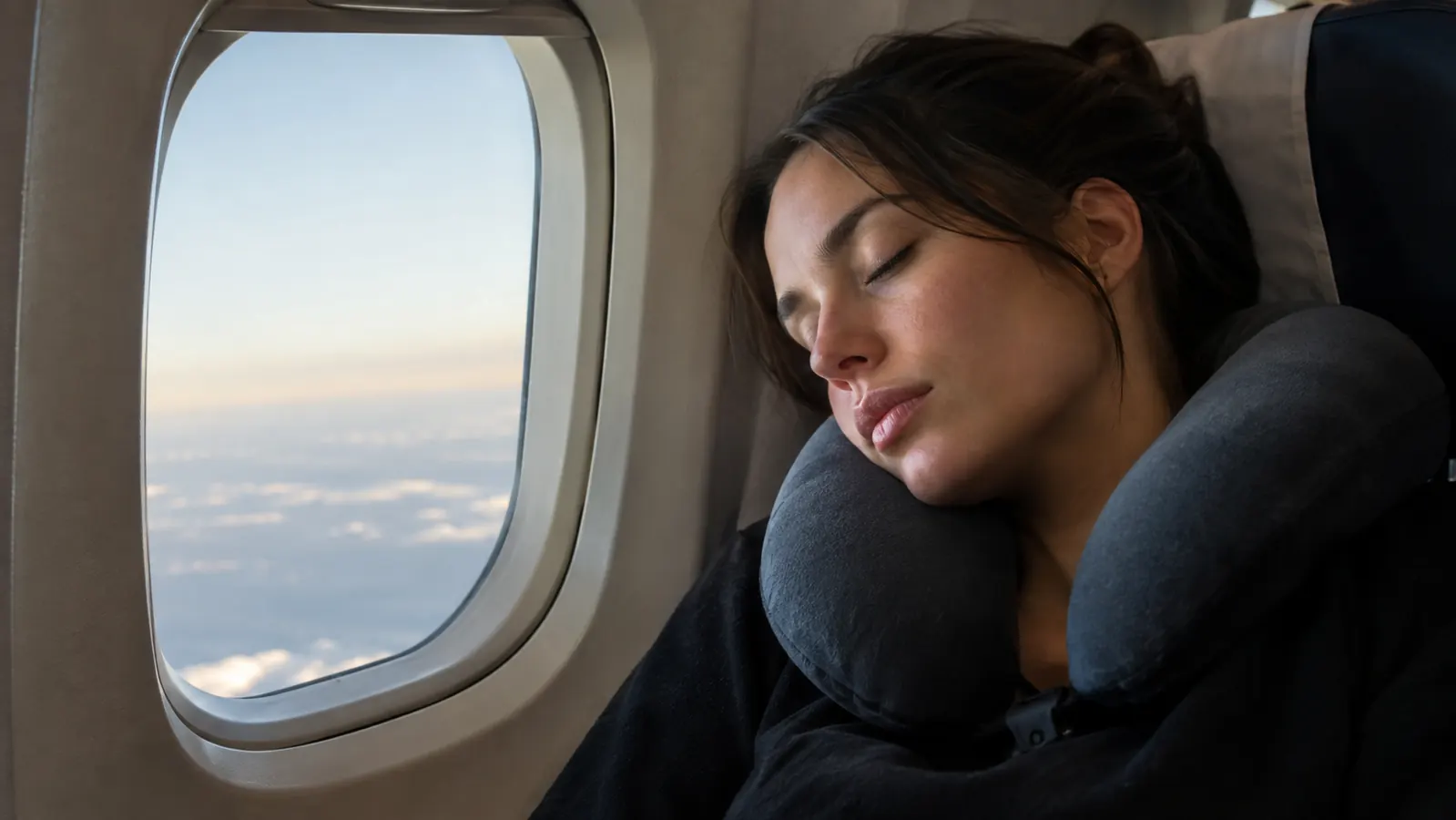
The window is your best friend on a long flight. I lean the napfun pillow against the window and rest my head on it, with the thicker part of the pillow under my jaw. This position keeps my head from bobbing forward when I drift off. The pillow acts like a little shelf between my head and the cold window glass. On the flight to Arizona, I slept for an hour and a half with my head against the window and woke up with no stiffness at all. That was the first time I realized the pillow was actually doing something, not just taking up space.
If you are in an aisle seat, the tray table can help in a different way. I lower it, fold my arms on it, and rest my forehead on my arms with the pillow around my neck for support. It is not as good as a window, but it is a lot better than waking up with your head on the shoulder of the person next to you. I have done that once. I do not recommend it. It happened on a flight home from Phoenix years ago, and the man next to me was very kind about it, but I spent the rest of the flight too embarrassed to close my eyes again.
For the window position, I also pull the window shade down once I am settled. The light wakes me up every time, and the shade makes the space feel more like a dark room. A sleep mask helps too, but the shade is the first step. On that same red-eye years ago, I forgot the mask and the shade was broken. The light from the wing started hitting my face around 5:30 in the morning, and I gave up on sleep and just watched the sun come up. Now I check the shade as soon as I sit down, before I even buckle in.
Step 5: Keep the Pillow With You, Not in the Overhead Bin
This sounds obvious, but I have watched people dig through the overhead bin at the start of a flight to find their pillow. The napfun pillow is easy to carry. I keep it around my neck or tucked under my arm when I board, so it is ready the moment I sit down. It also works as a small lumbar support during the flight if I need it. On a full flight to Phoenix, I used it as a cushion between my hip and the armrest, and it made the last hour a lot more bearable.
When the flight lands, I do not stuff it back into its compression bag right away. I let it breathe for a few minutes while I gather my things. Then I roll it gently and tuck it into the top of my carry-on. It takes up less space than you would think, and it is the first thing I reach for on the next flight. I have also learned to keep it out of the bottom of the bag. If it gets squashed under a heavy suitcase, it takes a while to puff back up, and you do not want to be the person at the gate trying to revive a flat pillow.
One more tip: if you are traveling with someone, the napfun pillow also works as a barrier between you and your seatmate. Dale and I use it that way on full flights. It gives both of us a little more personal space, and it keeps my head from ending up on his shoulder when I fall asleep. On the flight to Ireland, we had a middle and an aisle seat, and the pillow between us meant I could lean toward the aisle without worrying about drifting into him. It is a small thing, but it made the whole flight more comfortable.
What Else Helps
A neck pillow is the biggest piece of the puzzle, but it is not the only one. I fly with a small sleep mask and a pair of foam earplugs, and they make a real difference. I also wear layers, because the cabin temperature changes and a sweater is easier to manage than a blanket. And I try to drink water instead of coffee on long flights, because I sleep better when I am not dehydrated. If you have health concerns about long flights, like circulation or blood clots, talk to your doctor before you go. I am not a medical professional, and I do not want to pretend to be one.
The pillow only works if you set it up right, pick the right seat, and position your body before you close your eyes.
Set up your next flight for a better rest
The napfun neck pillow is the one I pack for every trip. Check today's price on Amazon and see if it works for your next flight.
Amazon Check Today's Price on Amazon →