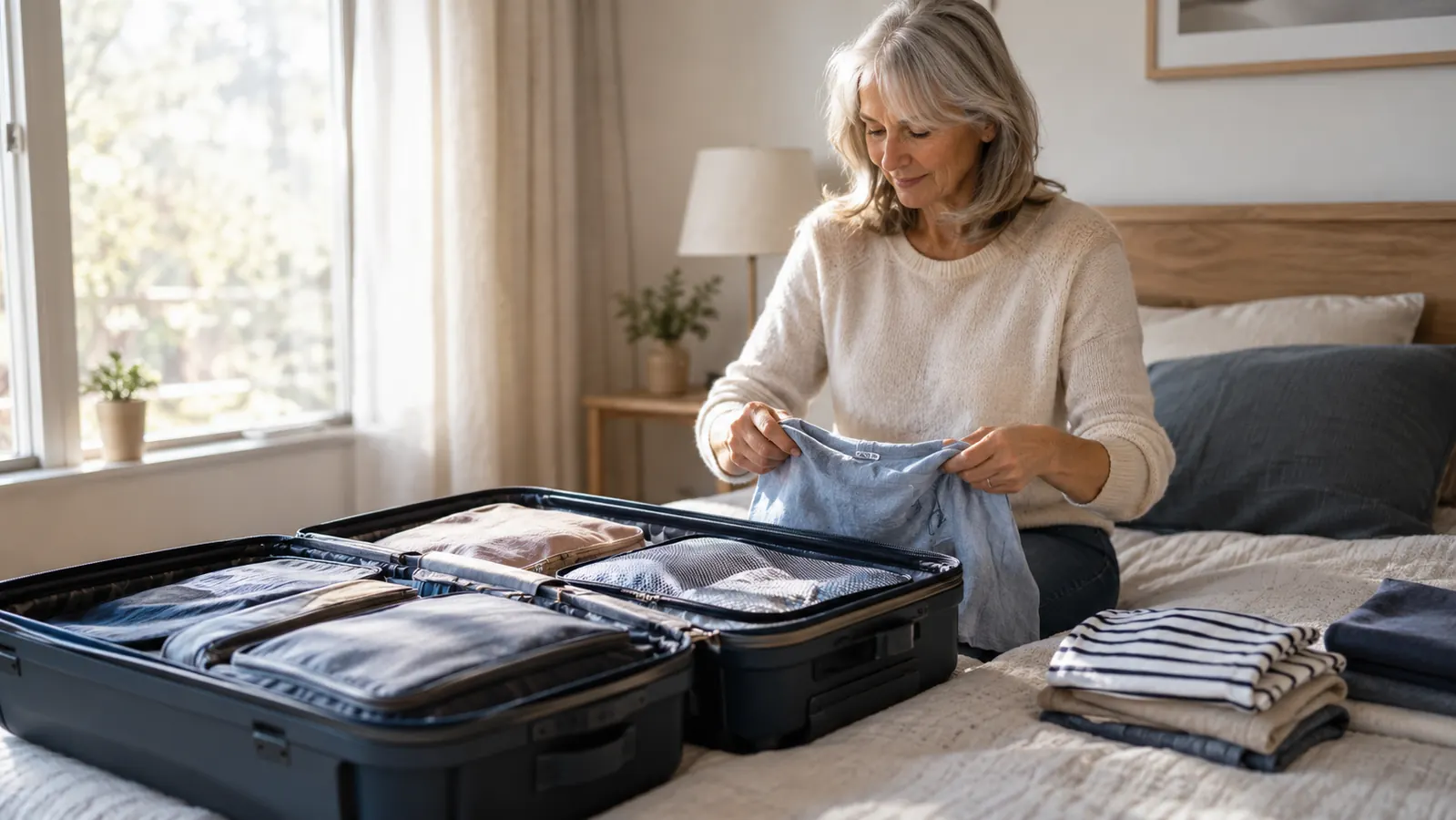
The last time we flew to see Dale's brother in Arizona, I watched a man at the gate wrestle a suitcase that was clearly too full. He sat on it to zip it, the zipper gave, and a sock shot out across the floor. I have been that person. For years I packed the way my mother taught me, which was basically to stack everything flat and then sit on the lid, and I arrived with wrinkled clothes, a stiff neck from hauling a bag that weighed too much, and no idea where anything was. Packing cubes changed that for me, and the BAGAIL 8 Set Packing Cubes are the set I have used on every trip since. This is the exact step-by-step method I use to pack a carry-on with them.
The method has five steps: sort everything on the bed first, divide it into the right cube sizes, roll and pack each cube, load the suitcase in a specific order, and then use the cubes to unpack fast at the other end. It takes about twenty minutes once you have done it a couple of times, and it works for a four-day trip or a two-week one. Here is how I do it.
Start with a set of packing cubes that actually fits a carry-on
The BAGAIL 8 Set gives you packing cubes in several sizes, plus a shoe bag and a laundry bag. That is enough sizes to pack a week of clothes in a standard carry-on without playing Tetris at the gate.
Amazon Check Today's Price on Amazon →Step 1: Empty the suitcase and sort everything on the bed
Before I touch a cube, I put the empty suitcase on the bed and dump out everything I think I want to bring. Then I sort it into piles: tops, bottoms, underwear and socks, pajamas, shoes, toiletries, and the odds and ends like chargers and books. This is the step most people skip, and it is the one that saves the most time later. If you pack straight from the closet into the suitcase, you cannot see what you actually have, and you end up bringing three jackets for a trip where you wore one.
I also use this moment to be honest with myself. Do I need four pairs of jeans for a five-day trip? No. Do I need the second pair of walking shoes? Only if we are doing a lot of walking, which on an Arizona trip with Dale's brother means yes. I put the maybes in a pile and do not let them into the suitcase until the real clothes are packed. If there is room at the end, they can come. There almost never is, and that is the point.
One more thing I do at this stage: I check the airline's carry-on size limit before I start, not at the gate. The limits are printed on the airline's website and they take thirty seconds to find. I have a tape measure in the drawer by the bed, and I measure the suitcase once a year to make sure it still fits the main airlines we fly. It saves a lot of stress at check-in.
Step 2: Match the cube sizes to the clothes
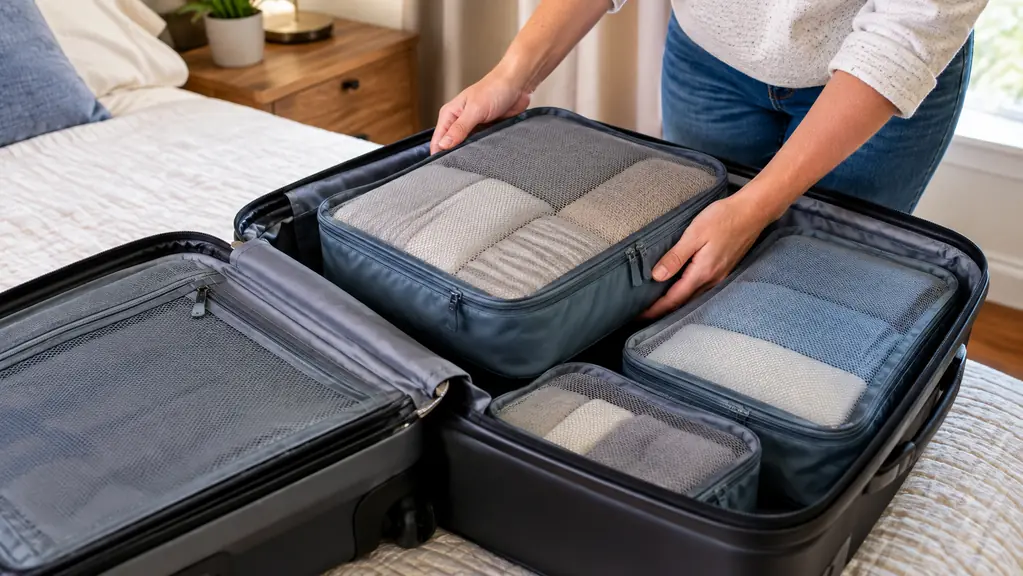
The BAGAIL set has eight pieces, packing cubes in several sizes plus a shoe bag and a laundry bag, and each size has a job. The large cubes hold the bulkiest things: jeans, sweaters, a hoodie, or a jacket that will not be worn on the plane. The medium cubes hold T-shirts, blouses, and lighter pants. The small cubes hold underwear, socks, and accessories. I keep one small cube for the flat things that otherwise slide around, like a tablet, a book, chargers, or a folded belt.
I do not assign one cube per person and call it done. I assign cubes by category, because that is what makes unpacking fast. Dale and I each get a small cube for underwear and socks, but the medium cubes are split by type, not by owner. His T-shirts go in one medium cube, mine in another. That way, when we get to the hotel, I can pull out exactly the cube I need without digging through his.
If you are packing for one person, the same idea works: one large cube for bottoms, one medium for tops, one small for underwear and socks, and another small cube for electronics. A second large cube can hold a jacket or a bulky sweater. You do not need to use every piece on every trip. On a short trip I leave a few of the cubes at home in the closet.
Step 3: Roll the clothes, then pack each cube
Rolling is the part that actually saves space, and it is worth doing properly. Lay the shirt flat, fold the sleeves in, and roll it from the bottom up into a tight cylinder. Tuck the collar or the hem into the roll so it stays. Jeans roll the same way, starting at the waistband. Underwear and socks I fold into small squares and stack flat in the small cube, because rolling them wastes space.
Then I pack each cube like a little suitcase: heavier, bulkier items on the bottom of the cube, lighter things on top. I fill the cube until it is snug but not bulging. A cube that is packed too tight is hard to zip and leaves dents in the clothes. A cube that is half empty wastes space in the suitcase. The right amount is full enough that the contents do not shift around, but not so full that the zipper strains.
The BAGAIL cubes have a double zipper that opens the top fully, which makes this easier than it sounds. I can see the whole cube when I am packing it, instead of reaching into a dark opening. The mesh top also means I can see what is inside without unzipping, which is handy on the second morning of a trip when I cannot remember which cube has the clean socks.
Step 4: Load the suitcase in the right order
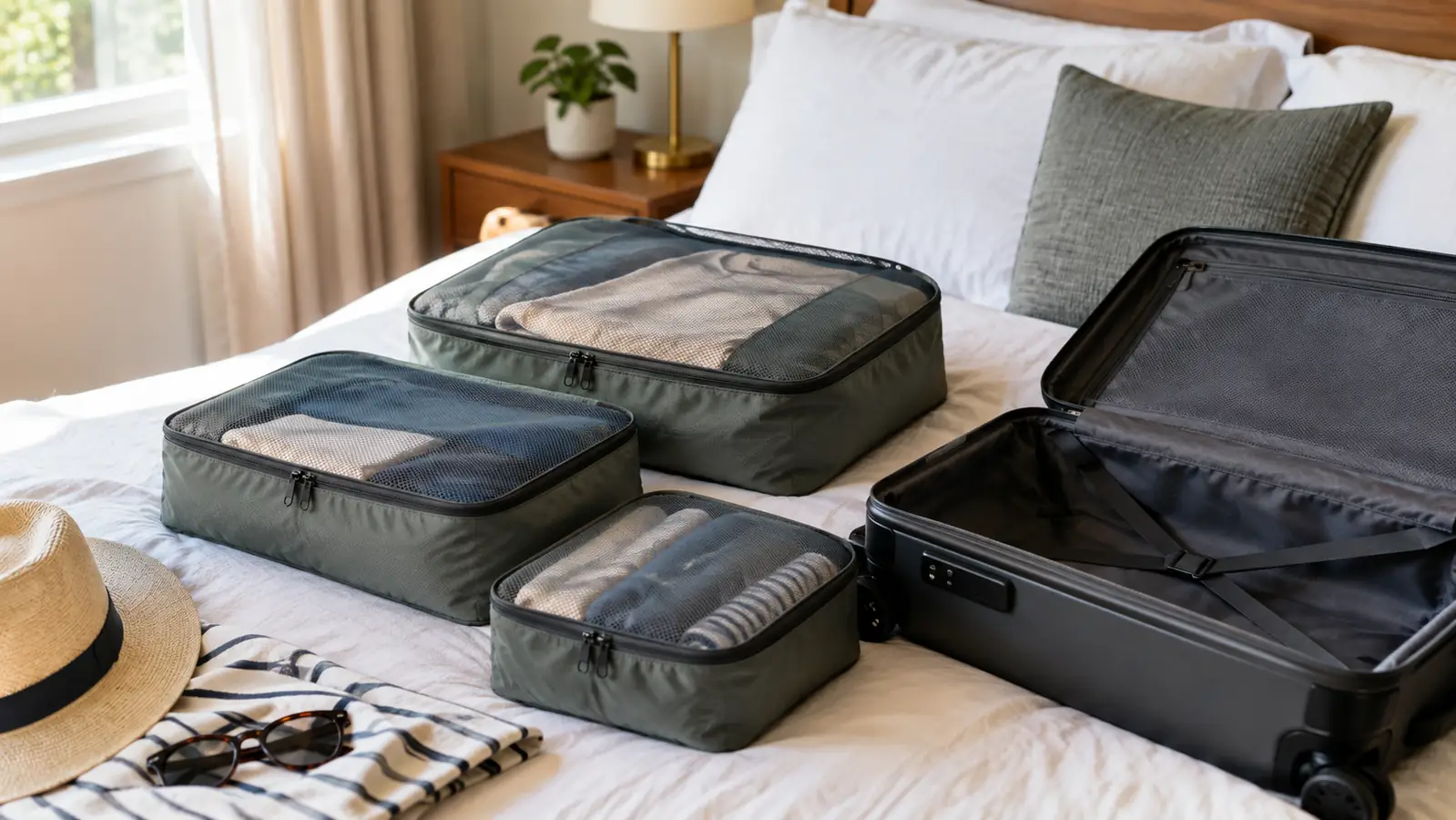
The order matters more than people think. I put the large cubes in the bottom of the suitcase first, side by side, with the heaviest one closest to the wheels. That puts the weight at the bottom, where it belongs, and keeps the suitcase from feeling top-heavy when I roll it. Then the medium cubes go on top of the large ones, and the small cubes fill the gaps around them.
Shoes go in the shoe bag that comes with the set, and I tuck it along the side of the suitcase or on top of the cubes, depending on how much room is left. The laundry bag folds flat into the bottom of the suitcase or into an outside pocket, and I use it on the way home for dirty clothes. Toiletries go in a separate pouch on top, never loose, because loose toiletries are how I ended up with shampoo on a sweater once.
The last thing I pack is what I will need first at the hotel: pajamas, a change of clothes, and the toiletry pouch. That goes on top, so I can open the suitcase in the hotel room and grab it without unpacking everything. If we are driving, I put the same things in a small bag that stays on the seat, but for a flight this order works well.
Step 5: Unpack fast at the hotel
This is the step that makes the whole system worth it. At the hotel, I open the suitcase on the luggage stand, lift out the cubes, and put them in the drawers or on the shelves. The large cube of jeans goes in the bottom drawer, the medium cubes of tops go in the next drawer, and the small cubes go on the bathroom counter or the nightstand. The suitcase is empty in under two minutes, and the clothes stay in their cubes until I need them.
I used to unpack by emptying the whole suitcase onto the bed and then spending ten minutes folding everything into the hotel drawers. Now I just move the cubes. The clothes stay rolled and organized, so the drawers look neat without any effort, and I can see everything at a glance through the mesh tops. On the last morning, I reverse the process: dirty clothes go in the laundry bag, clean clothes go back in their cubes, and the suitcase packs itself in about the same two minutes.
The other thing I like is that the cubes keep the suitcase organized on the way home, when everything is messier. The laundry bag holds the dirty clothes, the shoe bag holds the shoes, and the clean clothes go back in their cubes. I do not have to sort anything when I get home. I just carry the cubes inside and put them away.
What Else Helps
A few things make this method work even better. A small toiletry bag with a hook keeps the bathroom counter organized, and a hanging one works well in hotel bathrooms with limited counter space. A packing folder, which is a flat case with a flap, is good for dress shirts and blouses that you do not want to roll. I use one for the one nice shirt I bring on trips, and it slides into the suitcase flat on top of the cubes.
A lightweight daypack or tote that folds into its own pocket is useful for the flight, because it gives you a place for the book, the snacks, and the charger without opening the overhead bin. And a small pouch for chargers and cables keeps them from tangling around everything else. Dale is the one who always forgets a charger, so I keep a spare in the pouch and he has stopped asking to borrow mine.
If you fly a lot, a luggage scale is worth the small cost. I weigh the suitcase at home before we leave, and I have never paid an overweight fee since. The scale lives in the drawer by the bed, right next to my passport folder, and it takes ten seconds to use. For anyone with health questions about long flights, like blood clots or motion sickness, I would point them to their doctor rather than to any packing advice.
The first time I used packing cubes, I unpacked the hotel drawer in under two minutes and realized I had been making every trip harder than it needed to be.
Pack your next trip in twenty minutes instead of an hour
The BAGAIL 8 Set has the right sizes for a carry-on, and the mesh tops mean you can see what is inside without unzipping. It is the set I have used on every trip since I stopped sitting on my suitcase.
Amazon Check Today's Price on Amazon →