
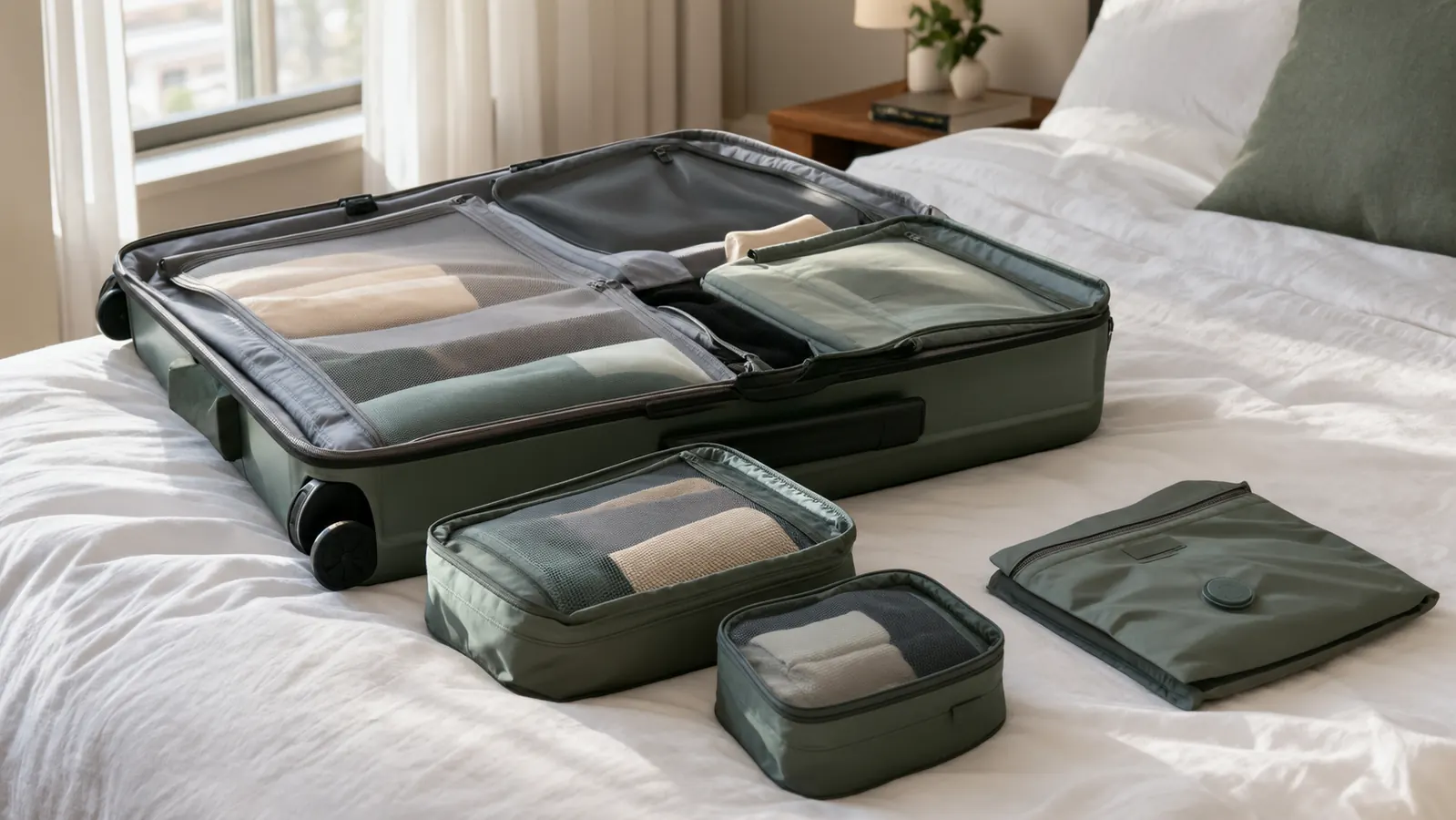
The question sounds simple until you are standing in your bedroom at 11 p.m. with an open suitcase and a pile of clothes that will not fit. Do you reach for packing cubes or compression bags? I have used both on the same trips, and the honest answer is that they solve different problems. BAGAIL packing cubes organize everything so you can see it and reach it. Compression bags squeeze a week of sweaters into a flat slab. For a carry-on, I would pick the BAGAIL cubes almost every time, and this is why.
I am Bev, and I have been packing for two for thirty-eight years. Dale and I travel a few times a year, mostly carry-on, and I have made every mistake in the book: the bag that weighed 52 pounds, the toiletry bag that leaked, the suitcase that would not close because I rolled my jeans like a fool. This comparison is based on real trips, including our two weeks in Ireland last spring and a long weekend in Arizona, not on a spec sheet.
My verdict: BAGAIL packing cubes win for carry-on travel because they organize without the effort, the wrinkles, and the roll-back problem of compression bags. Compression bags win only when you truly need to pack a bulky winter coat or a second pair of boots.
The carry-on fix that takes five minutes
BAGAIL's 8-set packing cubes turn a jumbled suitcase into separate sections you can actually see. No vacuum, no rolling, no wrestling a sleeping bag back into its sack.
Amazon Check Today's Price on Amazon →How I Tested Both
I packed the same load twice: once in BAGAIL packing cubes and once in compression bags. The load was a realistic one for a five-day trip: four pairs of pants, five shirts, two sweaters, a week of socks and underwear, a toiletry bag, and a pair of walking shoes. I used the same carry-on suitcase both times, and I timed myself from empty suitcase to zipped and ready. I did this in our spare bedroom in Knoxville over one rainy afternoon, with Dale reading out the times from his watch and offering commentary I did not ask for. The compression bags were the roll-up kind, no vacuum needed, which is what most people take on a trip since you will not find a vacuum cleaner in a hotel room. I folded everything the same way for both runs so the only difference was the container.
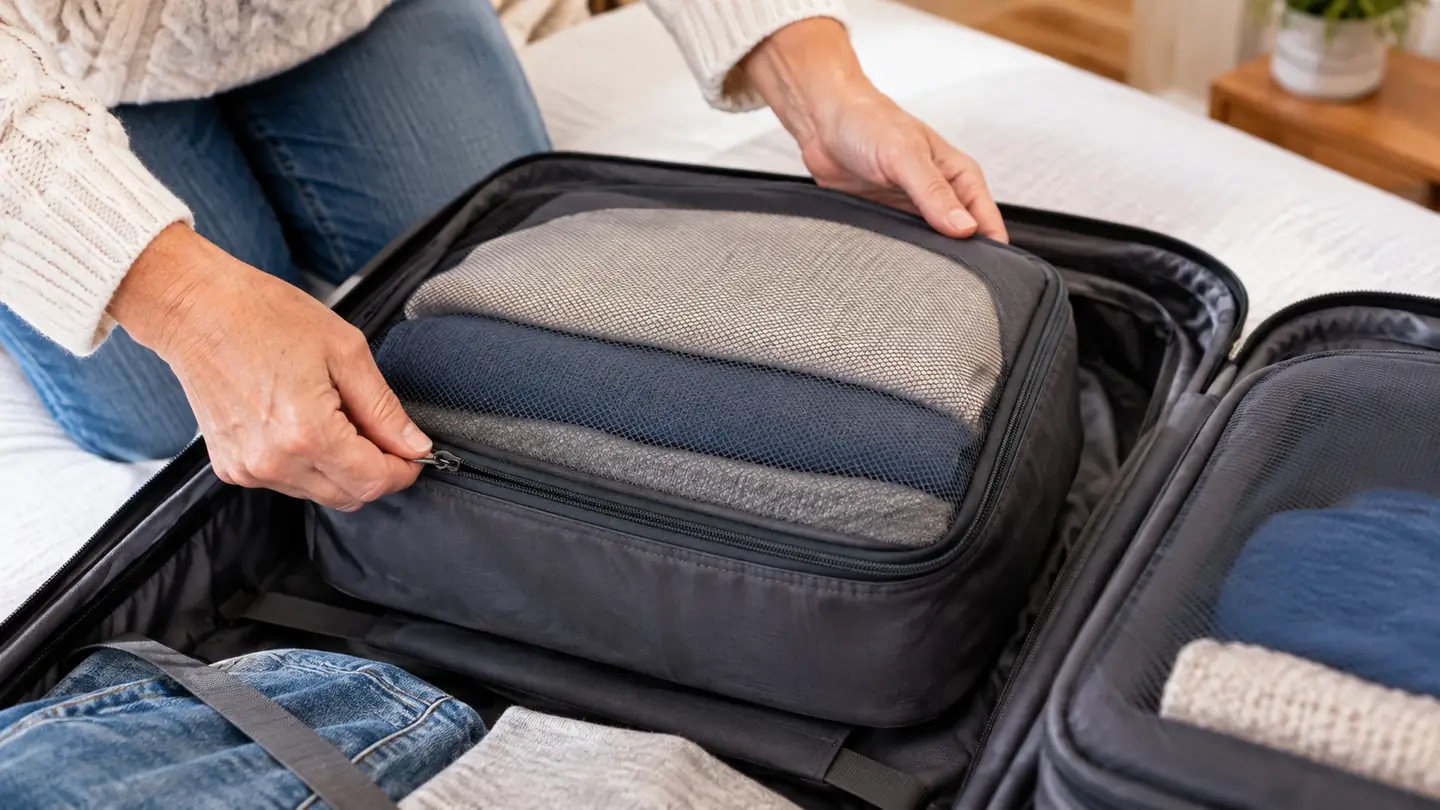
With the BAGAIL cubes, I was done in about nine minutes. With the compression bags, it took closer to twenty-five, and that was after I had practiced the rolling technique twice. The cubes also let me unpack in the hotel in about two minutes, because I could lift each cube out and set it on the shelf. The compression bags required me to unroll everything and refold it, which meant the hotel dresser looked like a yard sale for the first hour. The rolling was where the time went. You have to kneel on the bag, roll from the closed end toward the valve, then roll again because the first pass never gets all the air out. My lower back is not built for kneeling on a bedroom floor, and by the third bag I was sitting back on my heels to rest. Then, when I zipped the compression bags into the suitcase, they had puffed back up slightly, and I had to unzip and press them flat again. The cubes had no second round. Fold, drop in, zip, and the suitcase closed on the first try.
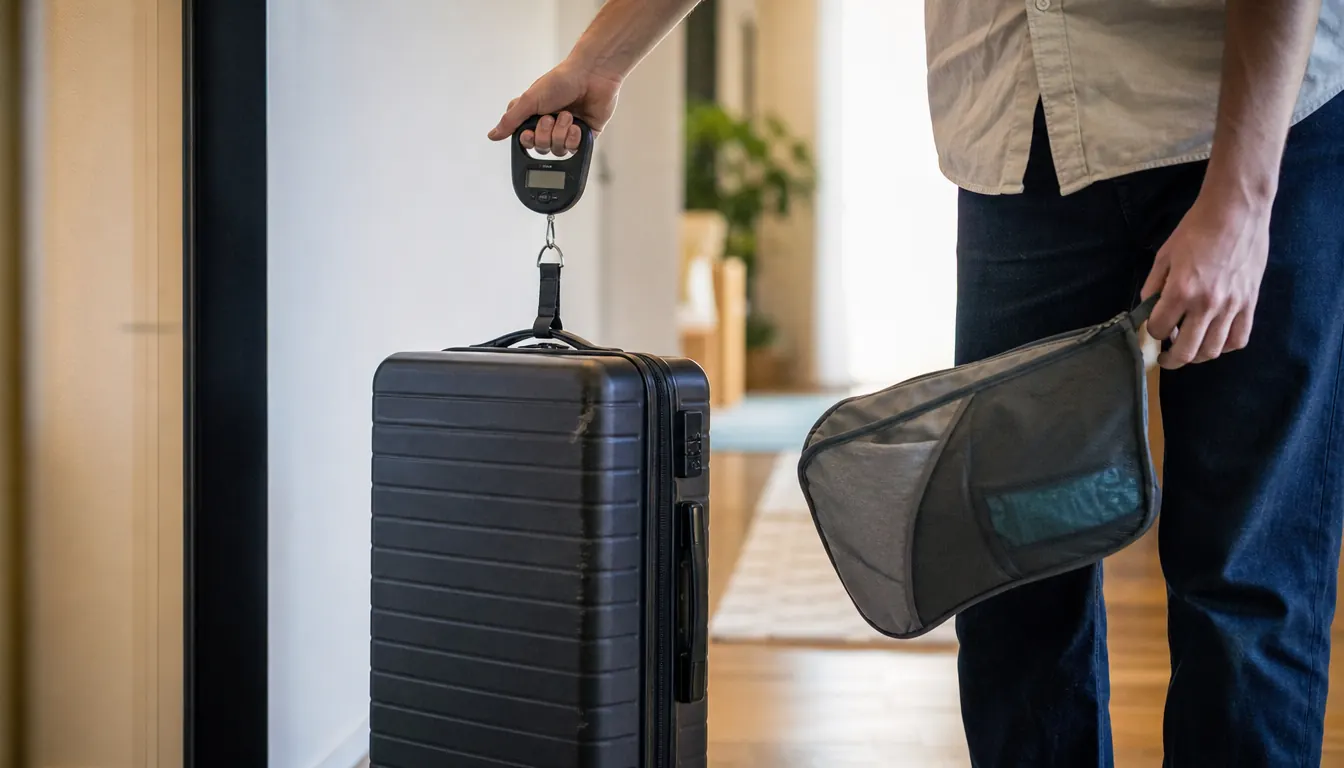
I also weighed the suitcase both ways. The compression bags freed up about four inches of depth in the suitcase, but they did not save a single ounce of weight. The two loads came within a few ounces of each other on my luggage scale, which makes sense when you think about it: squeezing the air out of a sweater does not make the sweater lighter. That matters more than people expect. If you are flying an airline with a strict carry-on weight limit, the extra room a compression bag creates is a trap, because it tempts you to fill it, and then the bag is too heavy at the gate. I have been that woman at the gate, moving shoes into my coat pockets, and I do not recommend it.
The Short Answer
If you are packing a carry-on for a normal trip, BAGAIL packing cubes are the better buy. They organize, they protect, they make the airport security line easier, and they do not add a single step to your morning. Compression bags are a specialty tool. They shine when you need to pack a puffy coat, a second pair of boots, or a bulky sweater for a cold-weather trip, and you are willing to trade organization for a flat slab of compressed clothing. Here is the way I think about it now. A carry-on is limited by size and by weight, and for most of my trips I hit the weight limit or the point where I can no longer lift the bag into the overhead bin long before I run out of room. When weight is the real ceiling, squeezing out more space does not help you. Organization does, because it shows you what you packed and makes it easy to take things back out. That is the job the BAGAIL cubes do well, and it is the job most carry-on trips actually need done.
| BAGAIL Packing Cubes | Compression Bags | |
|---|---|---|
| Space saved | Modest, mostly by keeping clothes flat and in neat blocks | Dramatic, especially for bulky items like coats and sweaters |
| Organization | Each cube is a labeled section; lift it out and you are unpacked | Everything is one compressed slab; you must unroll to find anything |
| Effort to pack | Zip and go, about nine minutes for a week | Roll, stuff, squeeze, seal, then roll again to remove air |
| Wrinkles | Clothes stay folded and mostly wrinkle-free | Compression creases deep wrinkles into shirts and pants |
| Weight | Light, though the cube fabric weighs a few ounces more than thin plastic | The plastic bags weigh almost nothing, but squeezing clothes does not make them lighter |
| Best for | Carry-on travel, road trips, cruises, keeping a suitcase organized | Packing bulky cold-weather gear or fitting a second pair of boots |
Where BAGAIL Packing Cubes Win
BAGAIL cubes win on organization, and organization is what makes a trip start smoothly. When I open my suitcase at the hotel, I do not want to dig through a pile of mixed clothing. I want to lift out the cube with my shirts, set it on the shelf, and be done. The BAGAIL 8-set comes in multiple sizes, so I can dedicate one cube to socks and underwear, one to shirts, one to pants, and still have room for a toiletry bag and a pair of shoes. The other place they win is the airport. When our bag was pulled for a closer look on the way out of Knoxville, the officer lifted out two cubes, peered through the mesh, and put them back. Thirty seconds. With compression bags, an inspection means the seal gets opened and the clothes spring back to full size, and you are left trying to re-roll a bag on a stainless steel table while the line watches. I have seen it happen to other people, and it is the kind of travel memory nobody wants.
They also win on effort. Packing cubes take about nine minutes for a week of clothes, and unpacking takes two. Compression bags take twenty-five minutes to pack and another twenty to unroll and refold at the other end. On a trip where you are changing hotels every few nights, that difference adds up fast. I would rather spend my vacation time at a pub in Dublin than on the floor of a hotel room rolling a compression bag. The BAGAIL cubes also win on wrinkles in a way that surprised me. Compression bags squeeze clothes into a slab, and every fold gets pressed into a hard crease. When I unpacked the compression run, my cotton blouses looked like they had been stored in a glove box. The same blouses from the cube run had soft folds that fell out after a night on a hanger. On a trip with a dinner or a church service, that is the difference between wearing what you packed and hunting down a hotel iron.
Where Compression Bags Win
I will be honest: compression bags win on raw space. If you are packing a winter coat, a chunky sweater, or a second pair of boots, a compression bag can shrink that pile by half. On our Arizona trip, Dale packed a heavy jacket for the cold desert evenings in a compression bag and it took up about a third of the space it would have in a cube. That is a real win, and I would not pretend otherwise. There is also the boots problem. On a cold-weather trip, a pair of boots plus a heavy sweater can eat a third of a carry-on all by themselves. When we packed for the two weeks in Ireland, I wanted a thick wool sweater and a fleece, and neither one fit in a cube without crowding everything else out. If I had used a single compression bag for just those two layers, I could have kept the cubes for everything else. Looking back, that is the combination I would choose for a cold trip.
They also win for one specific kind of traveler: the person who packs one giant bag for a long trip and checks it. If you are flying once a year and you need to fit two weeks of cold-weather clothes into a checked bag, compression bags are the tool. The tradeoff is that you will spend your first evening unrolling everything, and your clothes will come out with deep creases. But if the choice is between a second checked bag fee and a wrinkled shirt, the wrinkled shirt wins. I would add one caution from experience. Roll-up compression bags depend on a one-way valve and a zip seal, and both can fail. A seal that pops open in transit does not just lose the space you saved, it can make the suitcase impossible to close at the other end. Before you trust one on a real trip, pack it at home, leave it overnight, and see whether it is still flat in the morning. Most of mine held. One did not, and I would rather find that out in my bedroom than in a hotel lobby.
Start your next trip with a suitcase that closes
BAGAIL packing cubes are the five-minute fix for the overstuffed suitcase. See today's price and read what 44,000+ travelers say.
Amazon Check Today's Price on Amazon →Who Should Buy Which
Buy the BAGAIL packing cubes if you travel a few times a year, mostly carry-on, and you want a suitcase that stays organized from your front door to the hotel shelf. Buy them if you hate the airport security shuffle, if you have ever repacked your bag on the floor of a terminal, or if you simply want to find your socks without unpacking everything. They are also the better gift for a new traveler, because they make packing easier with zero learning curve. I would especially point first-time cube users toward the full 8-piece set rather than a single cube. The sizes are the point. Small ones for socks and chargers, mediums for shirts, larges for pants and sleepwear, and once each kind of clothing has its own home, you stop overpacking because you can see exactly how much you are bringing. That visibility did more to cure my overpacking habit than any list I have ever written.
Buy compression bags if you are packing for a cold-weather trip, if you need to fit a bulky coat or boots, or if you are checking one large bag and want to avoid a second bag fee. They are a specialty tool, not an everyday one. Most travelers, most trips, most carry-ons: BAGAIL cubes are the answer. Compression bags are the answer for the one trip a year when bulk is the problem. And if you are like me and your trips run the whole range, from a hot cruise out of Florida to a chilly week abroad, the honest answer is both: a full set of BAGAIL cubes as the backbone, and one or two compression bags in the drawer for the trips when a heavy coat or sweater has to come along. They are not rivals so much as tools for different jobs.
The cubes saved me nine minutes on the way out and twenty on the way back. The compression bags saved me space I did not actually need.
Pack once, pack right, and actually see what is in your suitcase
The BAGAIL 8-set is the carry-on organizer that makes the airport line easier. Check today's price on Amazon before your next trip.
Amazon Check Today's Price on Amazon →